Description
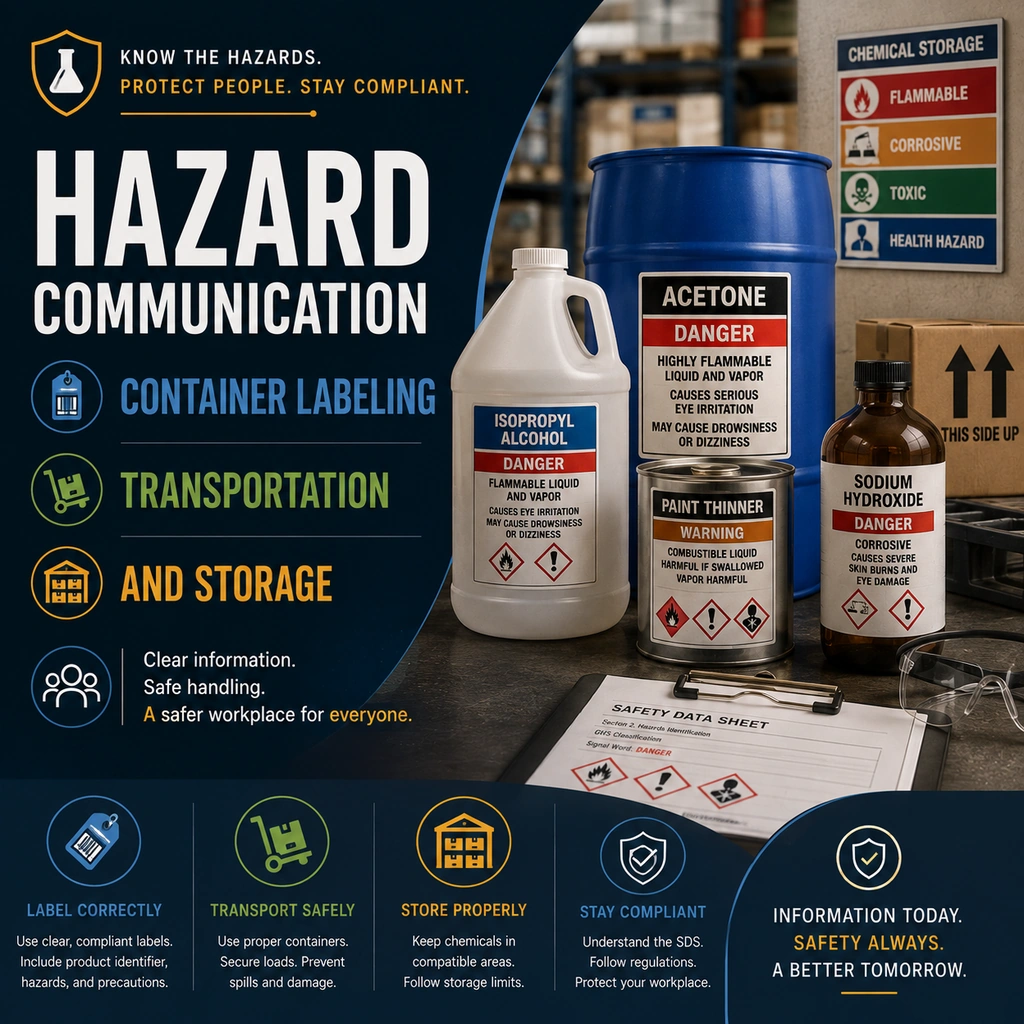
Every day, employees encounter products and materials that can present health, physical, or environmental hazards if not properly identified, transported, or stored. Understanding how hazard information is communicated is essential to maintaining a safe and compliant workplace.
This course introduces the key principles of hazard communication and explains how container labels serve as the first line of defense in identifying potential hazards. Participants will learn how to recognize important label elements, interpret hazard warnings, and understand the information needed to safely work with hazardous substances.
The course also covers the safe transportation of hazardous materials, including labeling and marking requirements used to communicate hazards during shipment and movement. In addition, learners will review best practices for storing hazardous materials to minimize the risk of fire, chemical reactions, contamination, and employee exposure.
Through real-world workplace examples, participants will gain the knowledge needed to recognize hazards, follow safe handling procedures, and support a culture of safety in any work environment.
Learning Objectives
Upon completion of this course, learners will be able to:
- Explain the purpose of hazard communication in the workplace.
- Identify the information commonly found on hazardous material container labels.
- Recognize hazard pictograms, signal words, and warning statements.
- Understand the importance of proper labeling during transportation.
- Describe safe storage practices for hazardous materials.
- Identify actions that help reduce the risk of chemical-related incidents.
- Apply hazard communication principles to everyday workplace activities.
Course Duration: 16 Minutes
Key Words: