
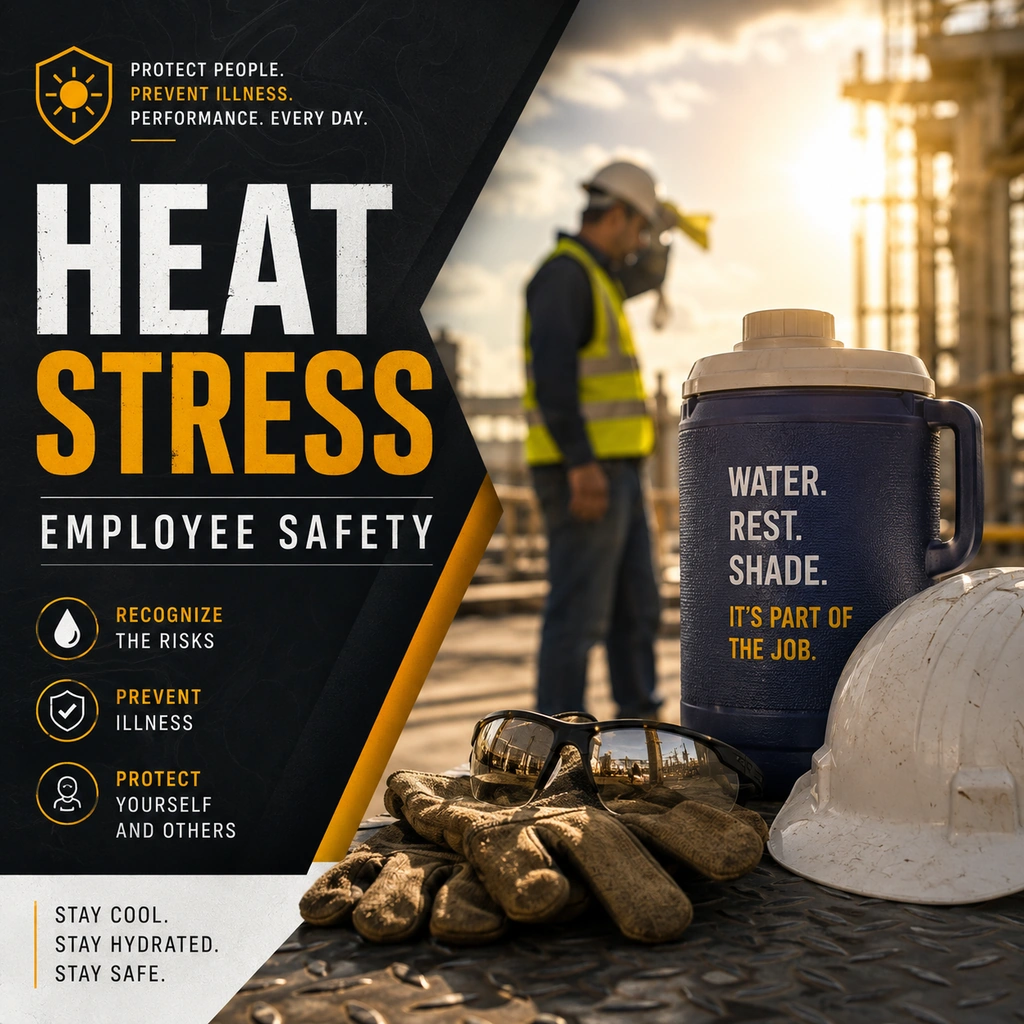
Description
Exposure to extreme temperatures can affect workers in nearly every industry. Each year, employees suffer heat-related illnesses ranging from mild heat cramps to severe and life-threatening conditions such as heat exhaustion and heat stroke.
Workers in industries such as construction, manufacturing, transportation, mining, maintenance, agriculture, and emergency services may experience increased heat exposure; however, heat hazards can exist in both indoor and outdoor work environments.
This training provides employees with the knowledge needed to recognize heat hazards, understand how excessive heat impacts the body, and apply safe work practices to prevent heat-related injuries and illnesses.
In This Course, You Will Learn How To:
- Recognize environmental and workplace conditions that contribute to heat stress
- Understand how the body reacts to increased temperatures and physical exertion
- Identify the warning signs and symptoms of heat-related illnesses
- Differentiate between heat cramps, heat exhaustion, and heat stroke
- Recognize personal and environmental risk factors that increase heat-related dangers
- Apply proper hydration, rest, shade, and cooling strategies
- Understand the importance of acclimatization and monitoring coworkers for signs of heat illness
- Follow safe work practices during hot weather or high-temperature work conditions
Course Topics Include:
- Heat stress hazards
- Effects of temperature and humidity on the body
- Causes and prevention of heat illness
- Heat cramps, heat exhaustion, and heat stroke
- Symptoms and emergency response procedures
- Hydration and cooling methods
- Workplace heat safety practices
- Recognizing and responding to heat emergencies
Certification Requirements:
Participants must successfully complete all required training activities and assessments to receive credit for the course.
Upon successful completion, participants will receive documentation verifying completion of their heat stress awareness training.
Keywords: Heat stress, heat safety, heat illness prevention, excessive heat, high temperatures, heat exposure, heat cramps, heat exhaustion, heat stroke, symptoms of heat illness, hydration, hot work environments, heat-related injuries, heat warning, temperature hazards, workplace safety, and environmental heat exposure.